Real Time Operations Centre

The Brantford Police Service is preparing to launch a new Real Time Operations Centre (RTOC), an initiative designed to enhance how police respond to calls for service, support frontline officers, and improve public safety.

The RTOC will leverage existing technology, information, and specialized police resources to support more efficient and informed responses to emergency incidents across the community.

Through a partnership with the City of Brantford, the RTOC will have the ability to access existing City-owned CCTV camera in public spaces on an emergency-only basis to obtain real-time situational awareness and support police response to active incidents.

For example, where a serious emergency incident occurs in a public area covered by existing city CCTV, authorized DTOC personnel may access the relevant live feed on an emergency-only basis. This may assist police in locating a person in distress, missing vulnerable child, violent suspect, or otherwise providing responding officers with timely situational awareness to support their response.

The cameras will not be continuously monitored, and access to the camera system will be incident-driven and limited to designated DTOC personnel. Footage will be retained for a limited period of time (72 hours), and unless preserved in accordance with an investigation, will be recorded over.

During the initial stages of RTOC operations, authorized personnel will have access to city camera feeds within the Downtown core. Access may be expanded to other areas of the city as required to support operational needs and public safety.
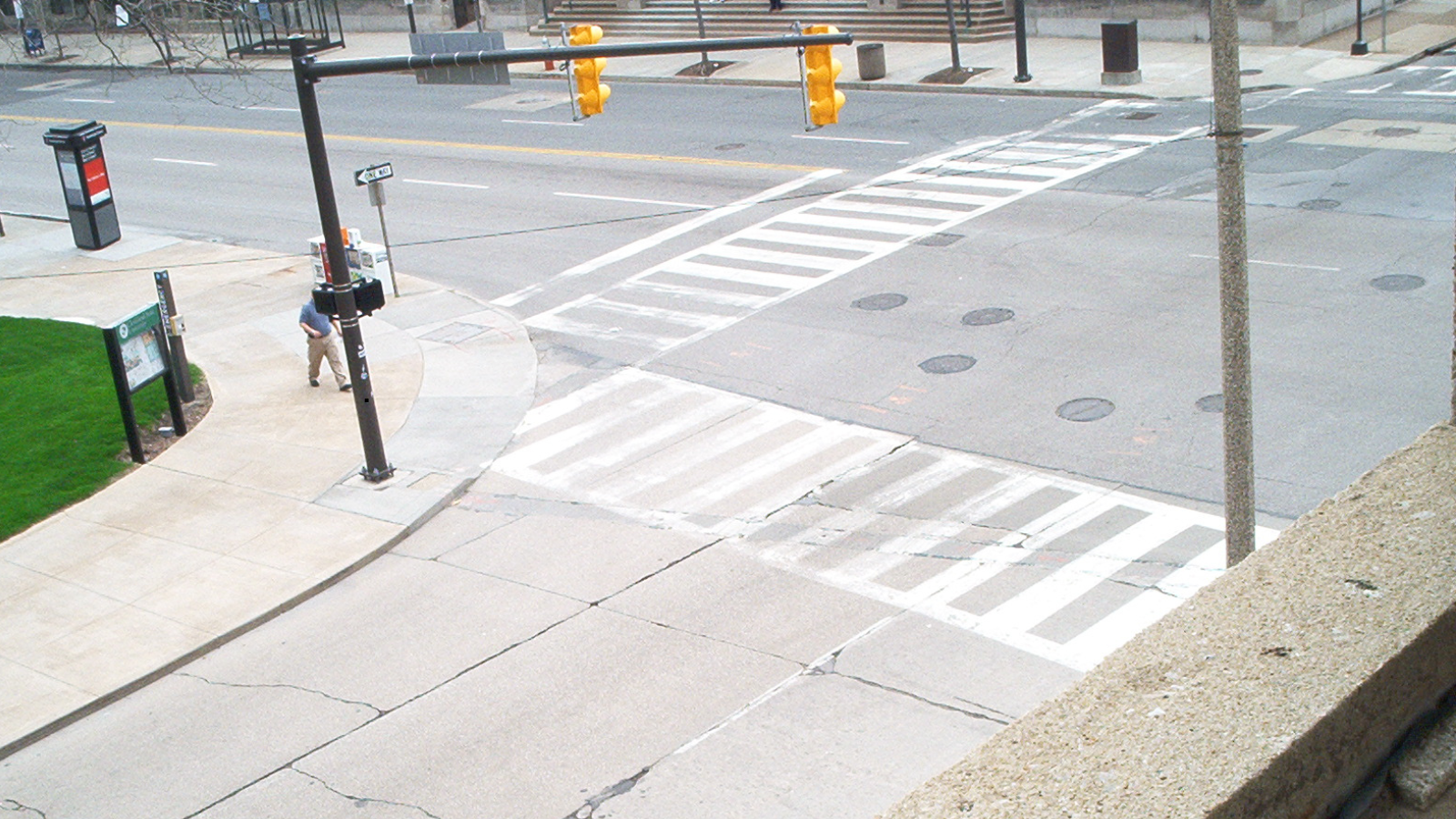
The Brantford Police Service recognizes that the introduction of new technology in public spaces raises important questions about privacy, oversight, and how information is used. 

The use of the RTOC, including all associated infrastructure, systems, and data, will be managed in strict accordance with applicable legislative and regulatory requirements. This includes adherence to guidance issued by the information and Privacy Commissioner of Ontario, along with full compliance with all relevant statutes, including the Municipal Freedom of Information and Protection of Privacy Act (MFIPPA).

The RTOC is part of the Brantford Police Service's ongoing efforts to use police resources strategically while maintaining a high standard of public safety and service.

Frequently Asked Questions

The Real Time Operations Centre (RTOC) is a centralized policing resource that provides real-time information and operational support to frontline officers during emergency situations.

The RTOC brings together existing police information, technology, and authorized video resources to provide officers with timely situational awareness while an incident is occurring. RTOC personnel can monitor approved CCTV and other authorized camera feeds, access relevant police systems and information, and identify information that may assist officers responding to an incident.

The RTOC is intended to enhance the information available to officers in real time, support informed decision-making, improve officer and public safety, and assist with the effective allocation of police resources. It does not replace frontline officers or traditional investigative functions; rather, it provides an additional layer of operational support to those responding to incidents.

The RTOC is being developed to:

  • Support frontline officers responding to emergency incidents
  • Improve situational awareness and timely information to officers during these emergencies
  • Help manage police resources more efficiently
  • Support investigations
  • Enhance public officer safety.


No.

The RTOC is intended to support frontline officers, not replace them.

The RTOC will also be activated to support emergency circumstances, including incidents such as:

  • active attacker incidents
  • child abductions
  • missing vulnerable persons
  • persons in crisis
  • violent disturbances
  • robberies
  • weapons-related incidents
  • medical emergencies; and 
  • terrorist threats.

The response to every call will continue to be based on the circumstances, assessed priority, and available information.

No.

RTOC personnel do not dispatch police units. Calls requiring a frontline police response continue to be managed through the appropriate Communications and operational processes.

RTOC personnel may, however, monitor calls and radio communications and provide information to responding officers when appropriate.

Yes.

One component of the RTOC will be the use of designated closed-circuit television (CCTV) cameras in public areas.

The cameras are intended to support public safety, assist with incident response, deter criminal activity and support investigations.

Camera locations and viewing fields will be approved and managed by the Brantford Police Service in accordance with established policy and applicable legislation.

No.

RTOC-designated camera feeds will not be continuously monitored.

Camera feeds may be activated when there is a legitimate policing purpose, such as responding to an emergency, supporting officer or public safety, or assisting with an investigation.

Access to the CCTV cameras must be incident driven- it must have a purpose- and that purpose is to support real-time situational awareness for an active, public safety concern. They are not used as surveillance and it’s so important to that we make that clear.

Access to the camera feeds is also audited. There’s a paper trail.

Yes, when there is a legitimate policing purpose.

For example, during a serious incident in an area covered by an RTOC camera, authorized RTOC personnel may activate and view a camera feed in real time to assist responding officers, locate a person or suspect, assess an area, or support public and officer safety.

The use of live camera feeds must be for a permitted law enforcement purpose.

Access will be limited to designated, trained RTOC personnel.

Only members assigned to the RTOC and trained in the use of RTOC equipment are permitted to operate that equipment, except for authorized training purposes.

This means access to the camera system will not be available to all members of the Brantford Police Service.

RTOC camera technology may be used for emergency circumstances only, including incidents such as:

  • Active attacker incidents;
  • Child abductions;
  • Missing vulnerable persons;
  • Persons in crisis;
  • Violent disturbances;
  • Robberies;
  • Weapons-related incidents;
  • Medical emergencies; and
  • Terrorist threats.

The response to every call will continue to be based on the circumstances, assessed priority, and available information.

No.

The RTOC's designated public-space cameras are intended to capture activity in public spaces.

Camera locations and viewing fields are subject to approval and cannot be changed without authorization.

The use of RTOC infrastructure must comply with applicable privacy legislation and BPS policy.

The RTOC camera system is not intended to continuously identify or track members of the public.

Camera access must have a legitimate policing purpose and is subject to applicable legislation and BPS policies.

The RTOC does not have facial recognition technology.

RTOC-designated camera recordings are retained in accordance with the Brantford Police Service's records retention requirements.

There is a short-term data availability window where footage may be available before it is automatically overwritten.

If footage is required for an investigation, evidence, or another lawful purpose, it may be preserved in accordance with applicable policy and leislation.

Yes.

Where the footage remains available and there is a permitted law enforcement purpose, police can access footage after an incident has occurred.

For example, DTOC personnel may review or capture video relating to a specific incident that occurred within the short-term data availability window if there remains a public safety concern.

Requests to access footage must identify the incident and purpose for the request, and access is recorded. 

Possibly.

RTOC - designated camera data may be accessed or released through the Brantford Police Service Freedom of Information office where applicable, and in accordance with relevant legislation.

Requests will be assessed under the applicable freedom of information and privacy requirements.

The Brantford Police Service recognizes that the use of technology and cameras in public spaces raises important questions about privacy.

The RTOC, including its infrastructure, systems, and data, will be operated in accordance with applicable legislation and regulatory requirements, including the Municipal Freedom of Information and Protection of Privacy Act (MFIPPA) and guidance from the Information and Privacy Commissioner of Ontario.

BPS policies also establish requirements for who can access RTOC equipment and data, and how camera use is authorized, and how recordings are stored and managed.

RTOC camera activations and access are subject to documentation and auditing.

RTOC personnel are required to record instances of camera activation, including the date, time, reason for activation, and occurrence number where applicable.

The RTOC supervisor is also required to conduct monthly audits of live-stream camera activation and access and prepare an annual report to ensure compliance with permitted uses. 

No. 

RTOC equipment and data may only be accessed or used for permitted law enforcement activities.

Members are not permitted to access, copy, share, distribute, or otherwise use RTOC recordings except as required and permitted for legitimate emergency purposes.

RTOC-designated recordings must be retained and accessed through the approved digital evidence platform.

They cannot be edited, erased, copied, shared, or distributed except where required and permitted for legitimate evidentiary purposes.

Camera locations will be determined by the Brantford Police Service based on operational and public safety considerations. Signage to advise the public of the presence of a camera has been posted in locations where a camera is present.